
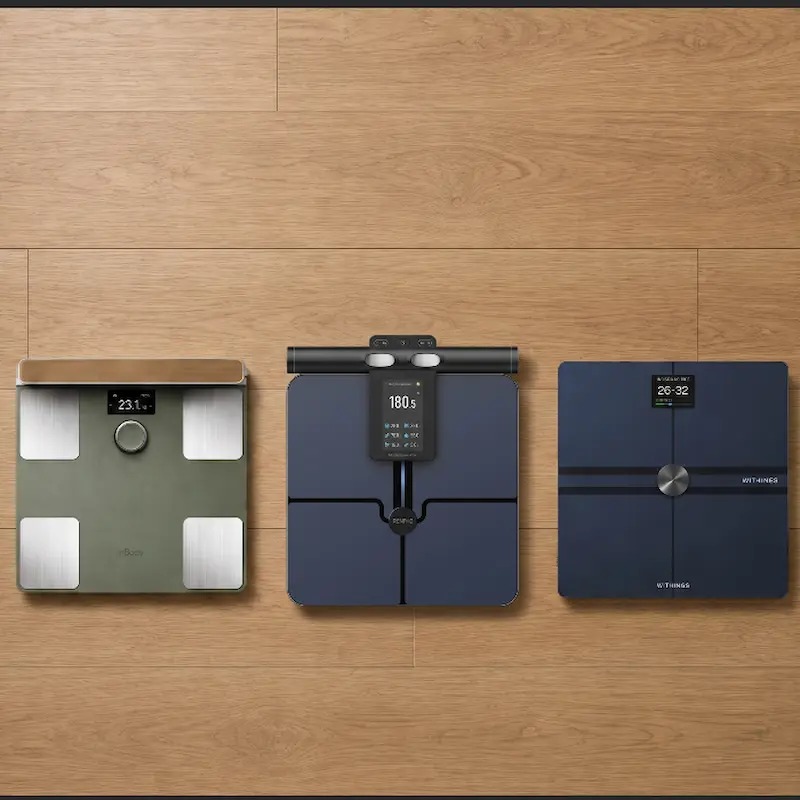
Tracking body composition at home is now part of standard health routines. However, finding the right scale is difficult because brands use different technology, ranging from simple foot-only sensors to advanced multi-point systems.
To see what actually works, our staff tester John put three of the most popular body composition scales to the test over a month-long period. We evaluated each option on measurement accuracy, ecosystem integration, and convenience to find a definitive winner in each category.
What to Look For in Body Composition Scales
Accurate tracking relies on three distinct technical factors.
- Sensor Technology: The scale must use multi-frequency or multi-point sensors to distinguish between different tissue types.
- Data Consistency: The device should provide reproducible results under similar conditions to ensure you are tracking real trends rather than random fluctuations.
- Ease of Integration: The companion app should sync data seamlessly to provide a holistic view of your health progress over time.
Measurement Accuracy and Sensor Technology: InBody Wins
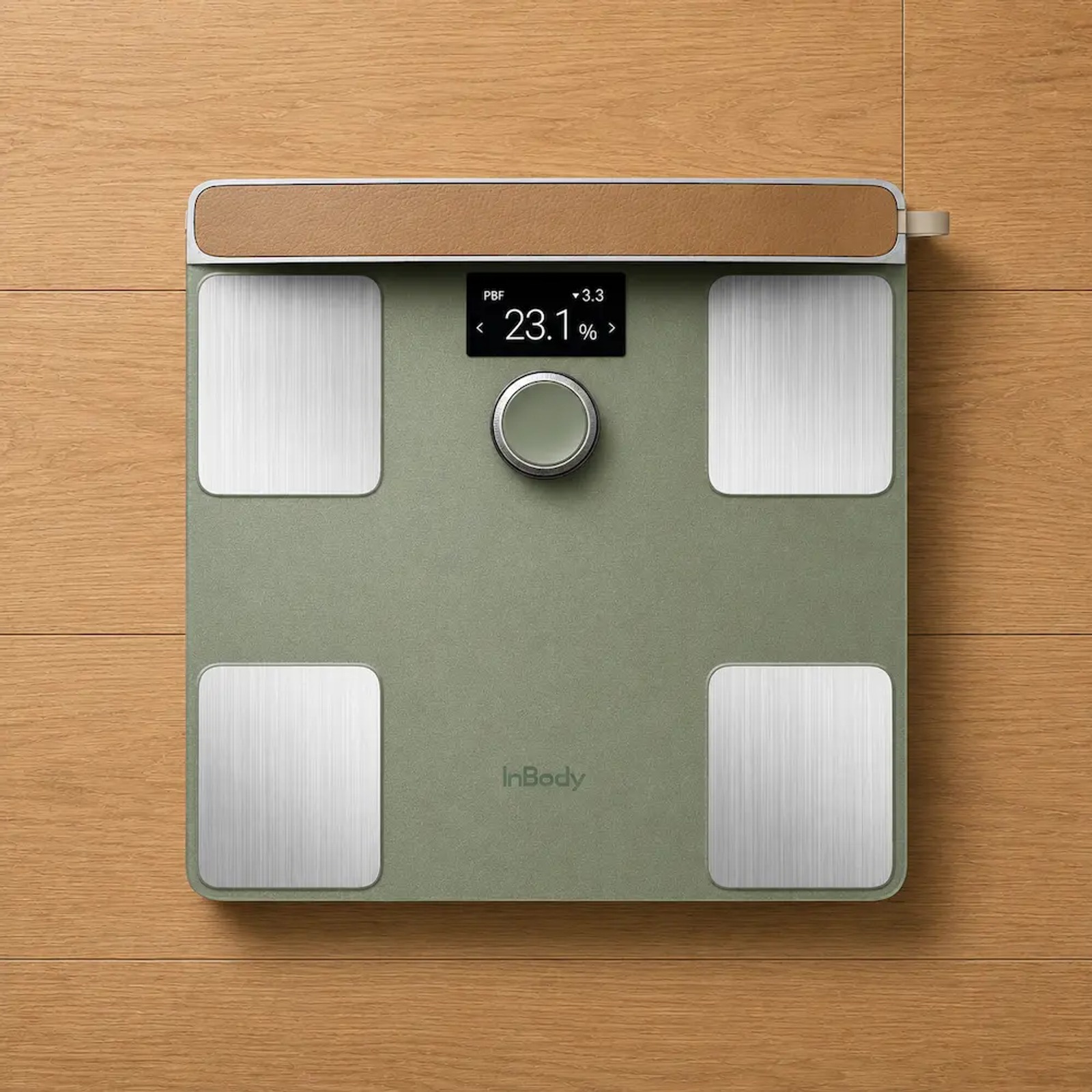
Evaluating how these composition scales interact with the body revealed significant differences in the data quality provided by each device.
The InBody Dial H40 wins with the most precise measurement process we tested. This scale uses 8-point tactile electrode technology with four sensors on the platform and four in a handheld unit for direct segmental multi-frequency analysis. During testing, John noted that when he measured himself after a workout, the device clearly showed muscle gain in his arms and legs while tracking fat loss in his trunk. This minimized estimation errors associated with standard scales and provided reliable data for tracking specific muscle gain or fat loss.
Withings Body Comp uses multi-frequency BIA (Bioelectrical Impedance Analysis) sensors. Unlike InBody, which uses 8-point tactile electrodes to measure segments independently, the Withings Body Comp uses a foot-to-foot BIA that estimates whole-body composition. John found that it provided a stable picture of his overall well-being, specifically noting how the vascular age metric helped him see the impact of his recent cardio consistency.
Renpho Smart Scale came in last due to its reliance on single-frequency BIA. John noted that the foot-only sensor loop often produced inconsistent readings as his hydration levels changed throughout the day. While it is functional for tracking broad weight trends, the estimation algorithms struggle to provide accurate body composition numbers compared to more sophisticated systems.
Ecosystem Integration and User Experience: Withings Wins
John, our tester, shared his experience getting health insights from each product.
Withings Body Comp wins for offering the most polished and holistic experience. John said the device integrates perfectly into the Withings app, syncing seamlessly with his other smart health tools. It is designed to serve as a central health hub, providing a modern, effortless user experience that keeps all his wellness data in one place without constant manual syncing.
InBody Dial H40 offers high-level data, but the user experience is more clinical. The requirement to hold the handle unit makes it less convenient than the other options. While this provides superior accuracy, John mentioned that the added step in his morning routine made it feel like a workout-prep task rather than a quick check-in.
The Renpho Smart Scale provides a simple, basic app interface. John found it easy to set up, and it works well for those who just want to glance at a number without diving into complex health analytics. However, he felt it lacked the deep long-term health insights and smart ecosystem connectivity that the higher-end models provide.
Convenience and Portability: Renpho Wins
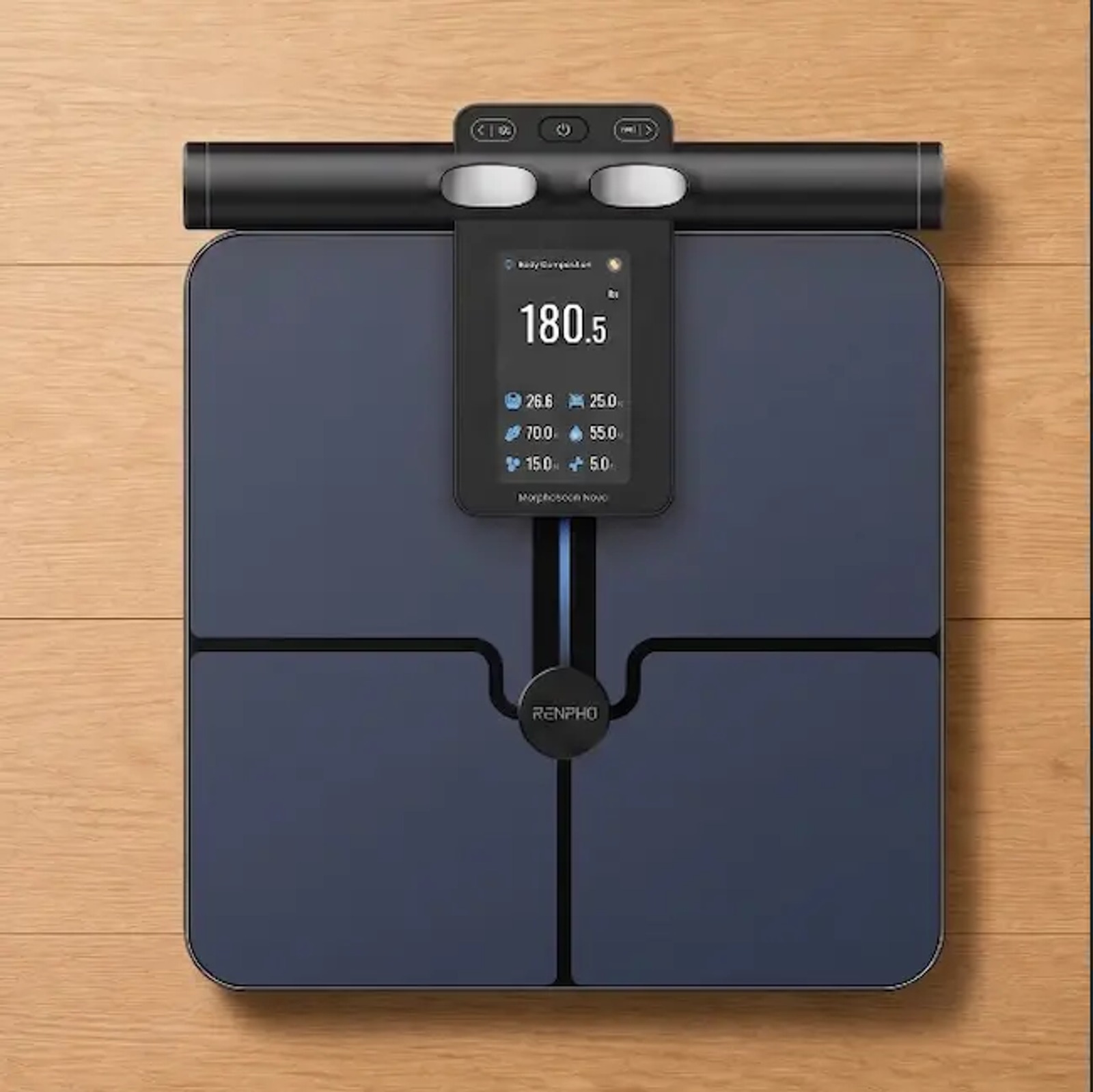
Body composition scales should remain easy to use and store, so you can maintain your routine without taking up too much space.
Renpho wins for portability and design. The scale is slim, lightweight, and takes up a minimal footprint in a bathroom. John found it easy to move or tuck away when not in use, and he appreciated how the minimalist aesthetic fit perfectly into his living space without looking bulky or like medical equipment.
Withings Body Comp is sleek and fits neatly into most home setups. John noted that its design and sturdy build make it easy to keep in a designated spot, and the clear display provides immediate feedback without requiring him to pull out his phone.
InBody Dial H40 is a logistical commitment. Due to its handheld design and professional build, it is significantly heavier and bulkier than the other models. John said it’s clearly designed to be a dedicated fixture in a home gym or bathroom.
Price and Value
Investing in a body composition scale requires balancing the upfront cost against the precision of the results.
- Renpho Smart Scale ($199.99): This is the most affordable of our advanced 8-electrode models. John found it a strong entry point for those seeking professional-style features without the $500 price tag.
- Withings Body Comp ($197.99): A premium performer in the middle price tier. At $197.99, it justifies the cost through its sleek glass build, multi-frequency sensor technology, and long-term utility for users who want a central health hub.
- InBody Dial H40 ($499.00): This is the gold-standard professional tier. While it carries a $499.00 price point, it is the only option here that provides 8-point tactile segmental analysis. John found that the ability to avoid estimation errors and track specific muscle imbalances made the higher cost a clear, worthwhile investment in precision.
The Bottom Line
After a month of intensive testing, we recommend the InBody Dial H40. While it represents a premium investment, its superior precision justifies the cost. It removes the guesswork from your health routine, delivering data-driven insights that outperform standard estimation-based alternatives.
Ready to try the InBody Dial H40?