
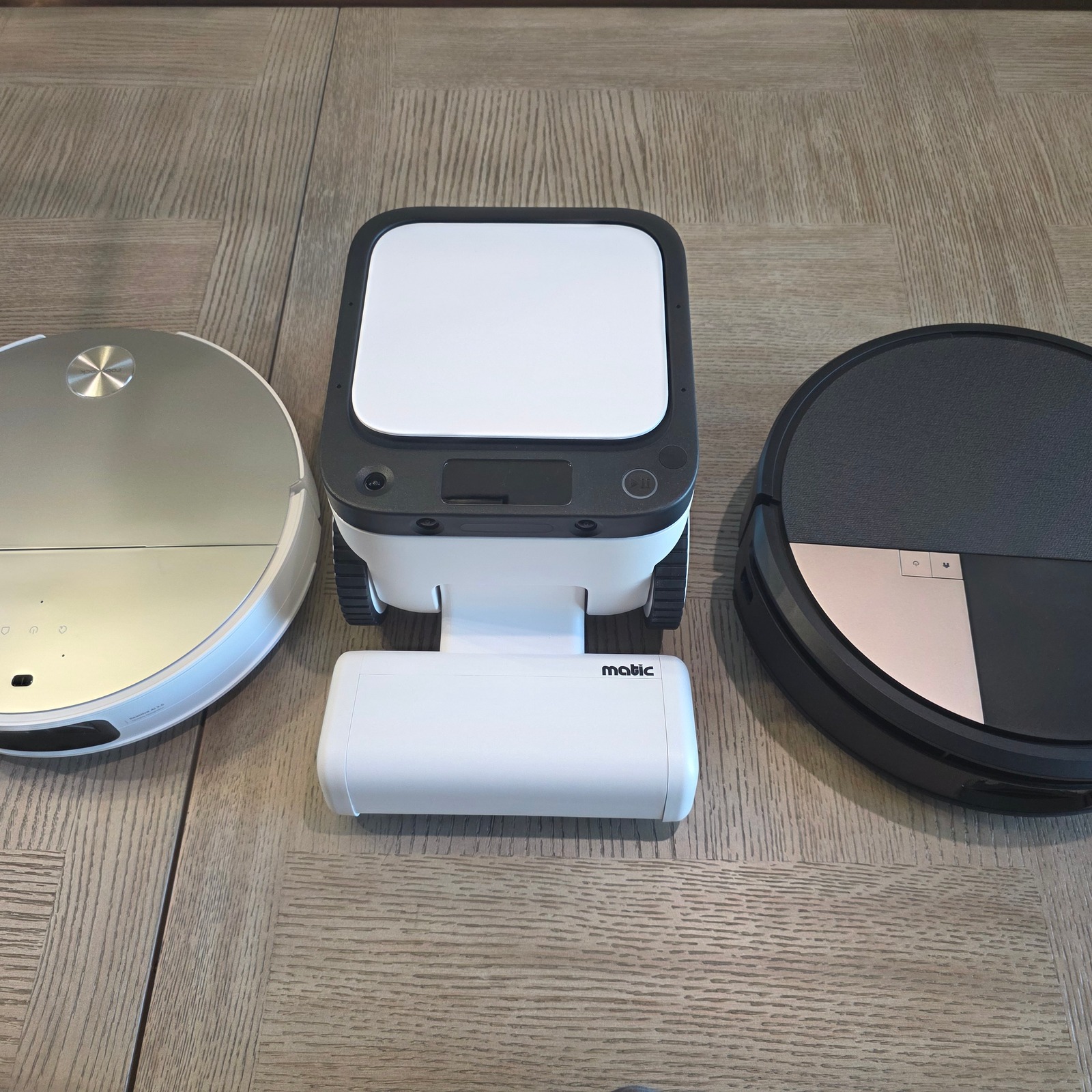
Anyone who has owned a robot vacuum knows the frustration of dealing with:
- Bulky, furniture-sized docking stations taking up valuable room
- Noisy motors that terrify household pets and young kids
- Constantly removing tangled hair from tight brush rolls
- Scrubbing gross, foul-smelling manual washing trays
- Pouring hundreds or thousands of dollars into machines that fail to perform
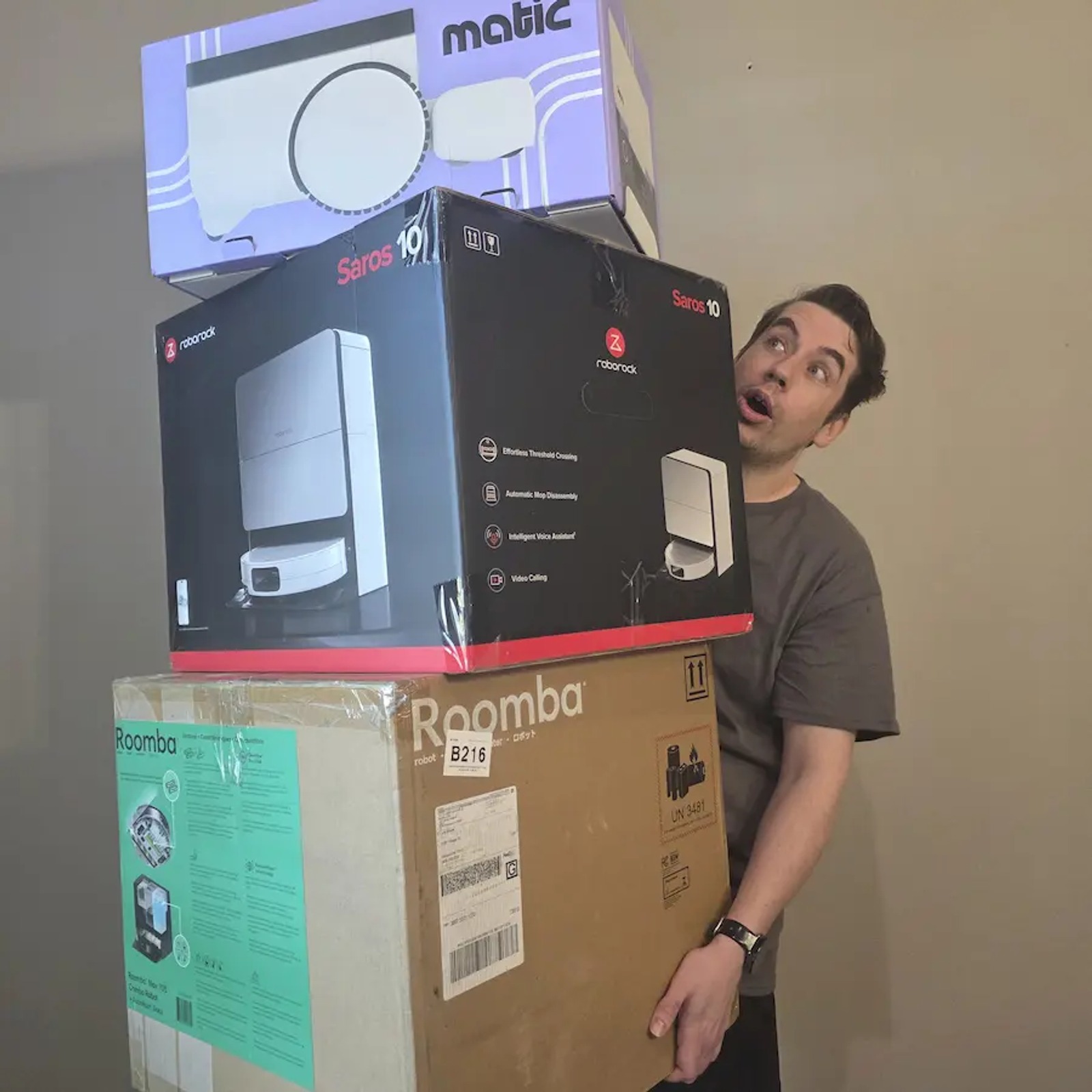
To find a robot vacuum that works, we tested three leading hybrid vacuum and mop systems: Matic, Roborock Saros 10, and Roomba Max 705 Combo. We judged each device across four key metrics: features, cleaning power, autonomy, data privacy, and price. Read on to see which model came out on top!
What to Look for in a Robot Vacuum
To determine which device handles household upkeep with minimal human intervention, our editor Dylan put Matic, Roborock Saros 10, and Roomba Max 705 Combo through rigorous side-by-side trials. As a long-time robovac user and father of two children & three Australian Cattle Dogs, Dylan evaluated each unit based on specific criteria:
- Cleaning modes: A true hybrid machine should shift automatically between vacuuming and mopping without manual prompts.
- Navigation: The robot vacuum needs intelligent spatial awareness to bypass household clutter and locate dirty zones accurately.
- Cleaning effectiveness: The primary goal is total debris extraction, reaching deep into corners and tight spaces.
- Volume: Low noise levels are essential to prevent disturbing family members and pets.
- Autonomy and maintenance: Smart technology should simplify daily routines rather than create extra chores.
- Data privacy: Bringing connected cameras inside your residence requires absolute confidence in data protection.
Let's examine how Matic, Roborock, and Roomba match up against each other.
Features & Technology: Matic Wins
A smart robot vacuum relies on intelligent sensors to navigate. Better environmental perception means the robot misses fewer spots, hits fewer obstacles, and needs less intervention.
Most robot vacuums use either laser LiDAR or optical vision to navigate your home. LiDAR works by shooting out a spinning laser beam to map out your rooms in 2D. This is great for spotting walls, but it isn't very good at identifying specific objects. Vision systems, on the other hand, use high-definition cameras to see the world more like we do. They can actually recognize things like phone chargers or stray socks instead of just seeing them as random obstacles. If you have kids or pets running around, camera vision is definitely the way to go.
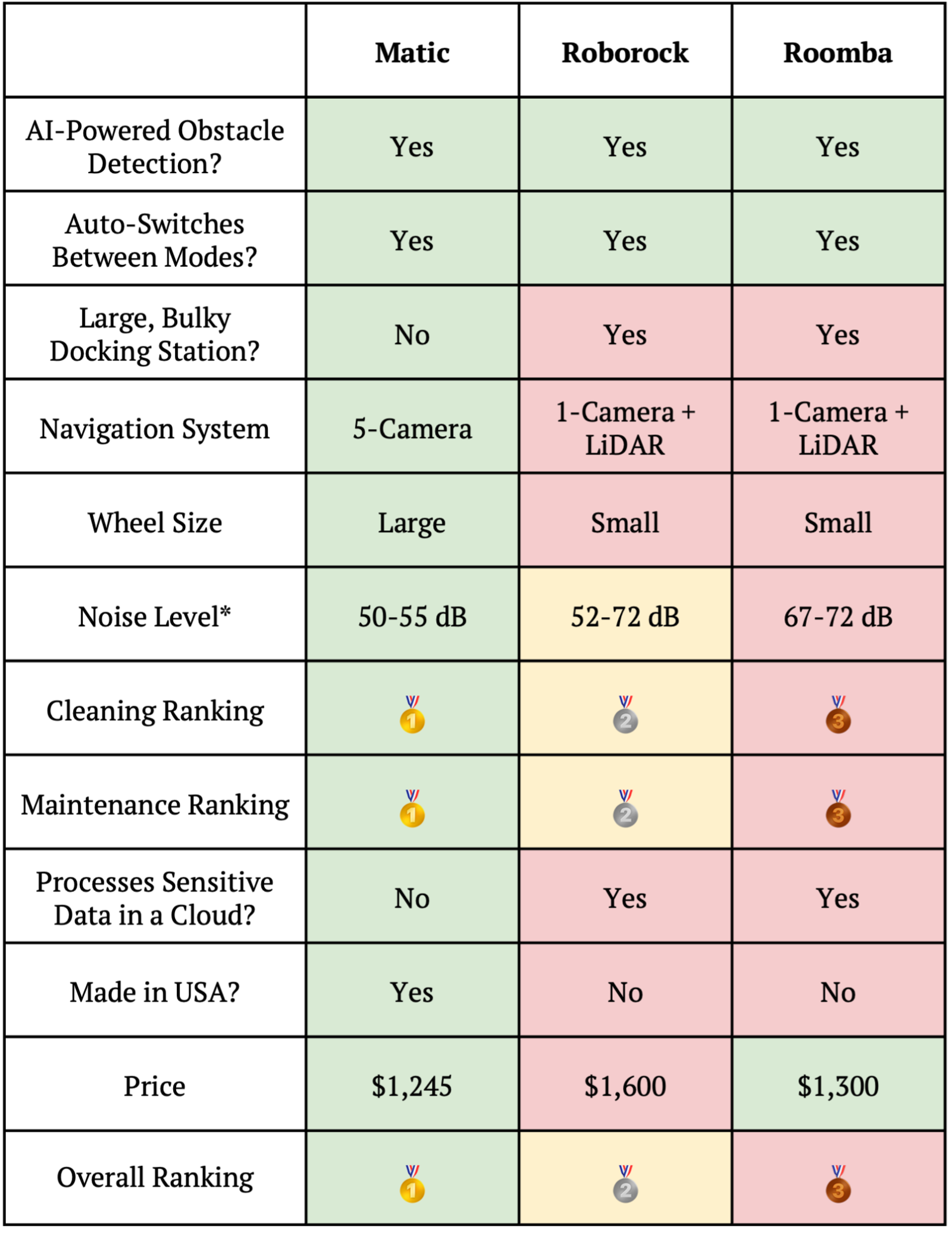
All three of the models we tested were able to map our space and switch between vacuuming and mopping on their own, but only one of them actually did it perfectly.
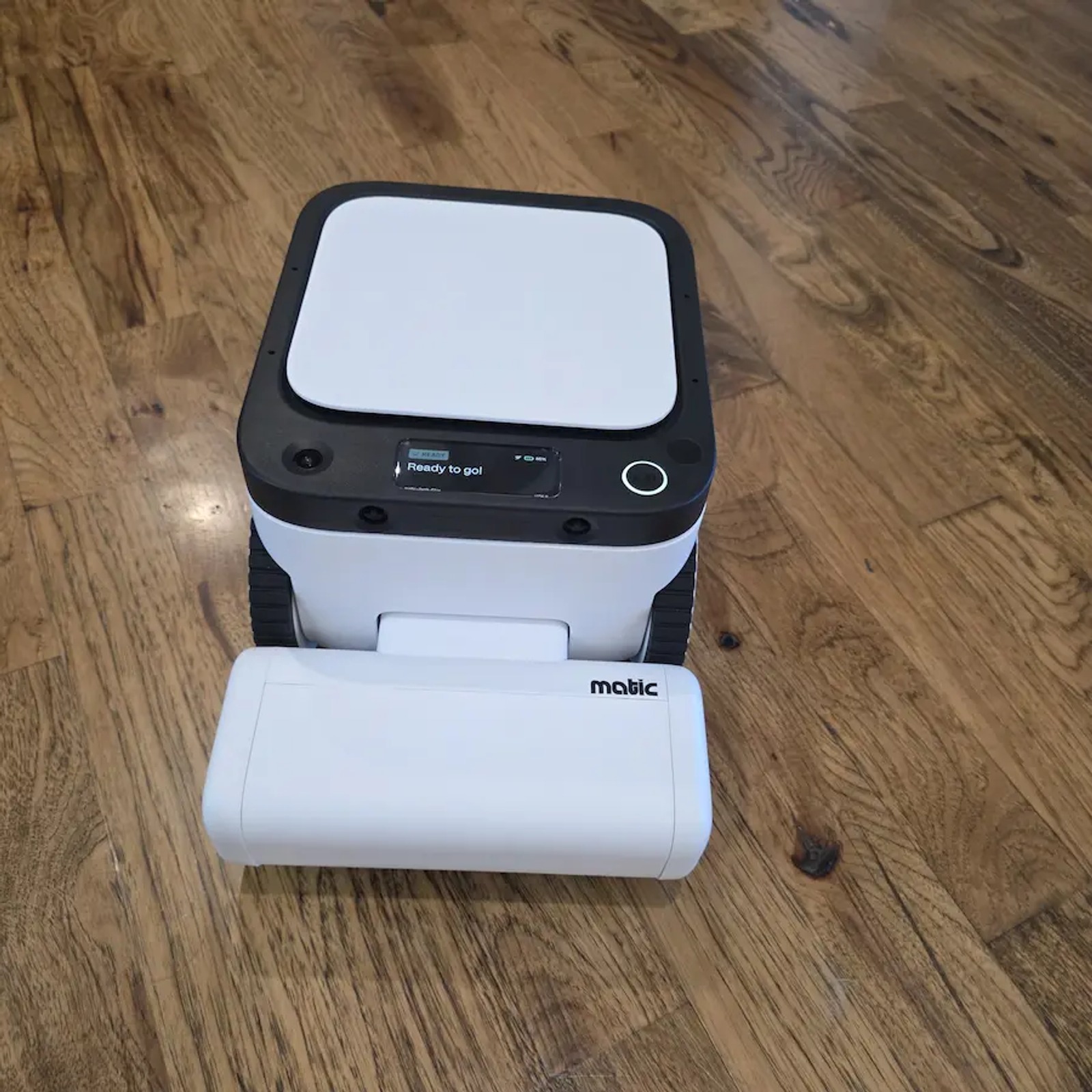
🥇 Matic wins with the best navigation capabilities. Matic stands alone as the only robot vacuum in our test utilizing a vision-only guidance platform paired with oversized front wheels designed to clear various floor transitions. Supported by five cameras and near-infrared sensors, it comprehends its surroundings just like a person, even in pitch blackness. Dylan reported that it maneuvered like an autonomous vehicle, adjusting smoothly when furniture shifted or people walked past. It handled obstacles, climbed rugs, and prioritized tasks with ease. Its physical build is equally impressive, featuring a sleek housing with minimal parts to clean and a compact dock roughly the size of a shoebox (4.9" × 7.1" × 5.1")—about 1/25th the footprint of Roomba or Roborock stations.
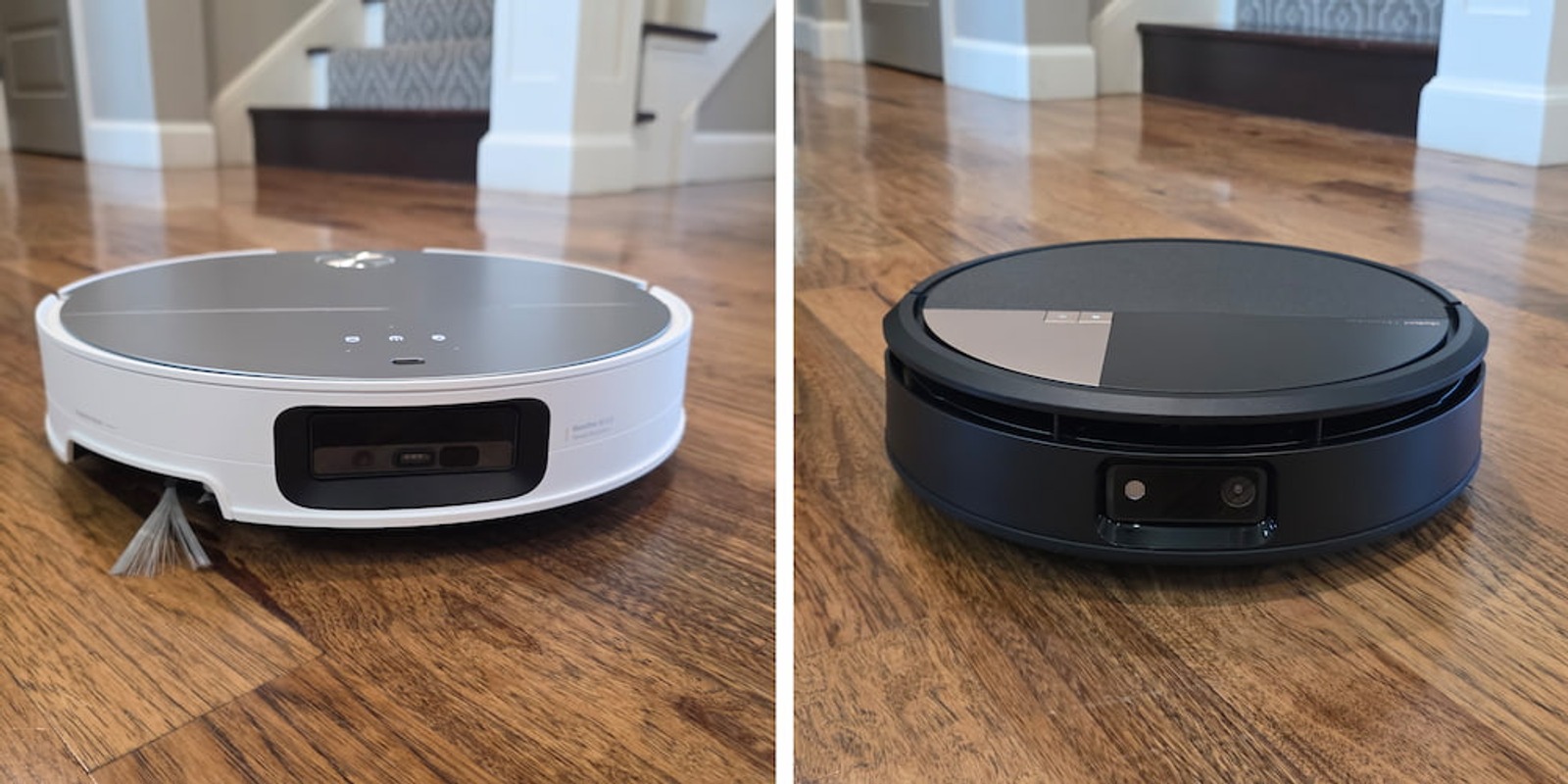
❌ Both Roborock Saros 10 and Roomba Max 705 Combo rely on LiDAR, small wheels, and oversized charging docks. Equipped with just a single camera apiece, they offer limited depth perception compared to Matic's five-camera matrix, translating to less reliable object recognition around kids and pets. Their small wheels struggle with surface transitions; Dylan noted that neither alternative could scale his thick shag rug. Both competitors feature massive base stations and complex internal parts that collect grime rapidly.
Effectiveness & Volume: Matic Wins
An elite robot vacuum is only valuable if it genuinely restores floor cleanliness without causing household disruption. Dylan assessed each system for a full week, tracking decibel output and observing how thoroughly they eliminated spills and pet fur.
Measured Volume
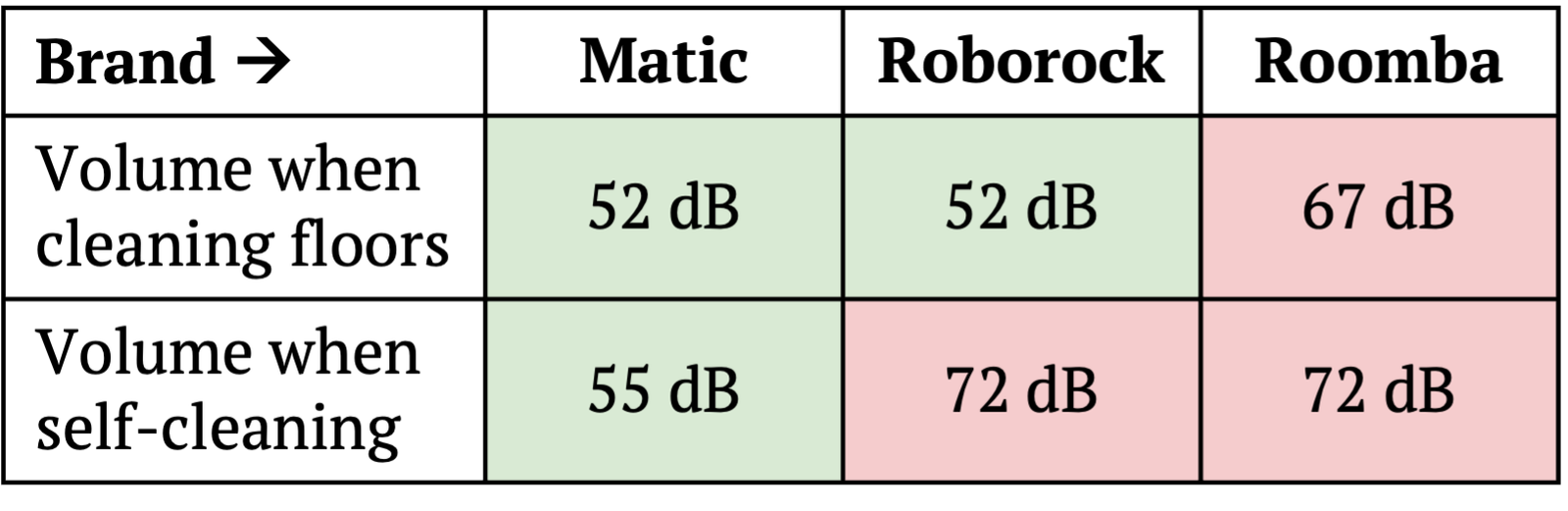
🥇 Matic wins as the quietest and most effective machine. Running at a whisper-quiet 52 dB during active cleaning and peaking at just 55 dB during self-maintenance cycles, Matic operated without disturbing children or animals. Dylan scheduled overnight runs, sleeping straight through them and waking up to flawless floors. It left no dusty corners, trapped pet hair, or stray crumbs behind, and finished entire floor plans without requiring mid-cycle water refills—even wiping away dried milk splatters effortlessly.
🥈 Roborock Saros 10 comes in second with higher debris remnants and a loud self-cleaning phase. Operating near 52 dB while cleaning, it remains reasonably quiet, though short of Matic's standard. While it didn't disrupt the household during standard routes, its dock roared to 72 dB upon returning, triggering dog barks and waking kids. Cleaning thoroughness lagged behind Matic, leaving particles stranded along baseboards and kitchen edges. It also required frequent trips back to the dock for water refills due to its small onboard tank capacity.
❌ Roomba Max 705 Combo is the loudest and least thorough robot. Operating at roughly 67 dB during standard cleaning—matching traditional upright vacuums—and spiking to 72 dB during dock cycles, it proved excessively loud. Dylan's children avoided rooms while it ran, and scheduling overnight runs was out of the question. Its cleaning output was the weakest of the group, leaving significant messes in corners and failing to pull embedded pet hair from carpets.
Autonomy & Ease-of-Use: Matic Wins
The ultimate purpose of any robot vacuum is saving time and effort. Here is how their user experience compares:
🥇 Matic wins as the most intelligent robot with the least maintenance required. Throughout Dylan's trial, Matic dodged obstacles independently without slamming into furniture or hanging up on carpet edges. Scheduling nighttime cycles was easy, and we woke up to clean floors every morning without doing anything. Across a full week of testing, upkeep required nothing beyond filling the fluid reservoir and swapping out the dust bag.
🥈 Roborock Saros 10 takes second place with average navigation and higher upkeep demands. While it rarely required physical rescue during cleaning runs, it occasionally bogged down near the charging base. Its undersized wheels struggled with high-pile rugs, frequently trapping the unit on shag carpets. Dylan noted that its brush roll captured pet hair easily, demanding manual untangling. Worse yet, the mop roller emitted foul odors after only a few days, requiring frequent hand-washing. True hands-off automation proved impossible here.
❌ Roomba Max 705 Combo is the dumbest and hardest to maintain. Dylan reported that Roomba regularly collided with household items and pets, tangled itself in loose power cords, got stuck on thick area rugs, and frequently demanded manual assistance, rendering overnight scheduling unreliable. Its base station accumulated grime quickly, requiring a full wash after just one week. Its dry waste bin lacked a sealed bag containment system; emptying it puffed a noticeable cloud of fine dust right into the user's face.
Data Privacy: Matic Wins
A camera-equipped smart robot vacuum scans your entire living space, making local data storage essential to prevent floorplan leaks or privacy breaches through cloud servers.
🥇 Matic handles all data processing directly on the device with zero cloud transmission. Information never leaves your house, ensuring it is permanently erased whenever you choose.
🥈 Roborock implements basic local safeguards, but operational metrics and mapping files still transfer to external cloud servers beyond independent verification. Requesting data deletion involves contacting corporate support directly, and anonymized logs may persist.
❌ Roomba 705 Max Combo represents the least secure option, storing Wi-Fi keys, architectural layouts, object detection logs, and positioning coordinates directly within a cloud ecosystem linked to your identity. Deletion requests take up to 45 days, and wiping your records disables app functionality completely.
Price: It’s a Tie
Advanced robot vacuums command steep price points because they reclaim hours of manual labor every month. Here is how the costs break down:
🥇 Matic is $1,245. The lowest price point in our evaluation for the most capable, autonomous machine.
🥇 Roomba is $1,300 — priced near Matic, yet delivering inferior performance and higher maintenance.
❌ Roborock is the most expensive at $1,600.
Final Verdict: Matic is the Clear Winner
Which robot vacuum stands out as the best? Following three weeks of rigorous evaluation, we recommend the machine that cleans most thoroughly, runs with minimal noise, demands virtually zero upkeep, and secures your personal data locally. That winner is Matic.
Our editor Dylan sums it up best: "Matic is my new daily robot vacuum. I schedule it overnight and wake up to completely clean floors – no crumbs, no tangled hair, no complaints from the kids."
Ready to try Matic and wake up to a clean home every day?