
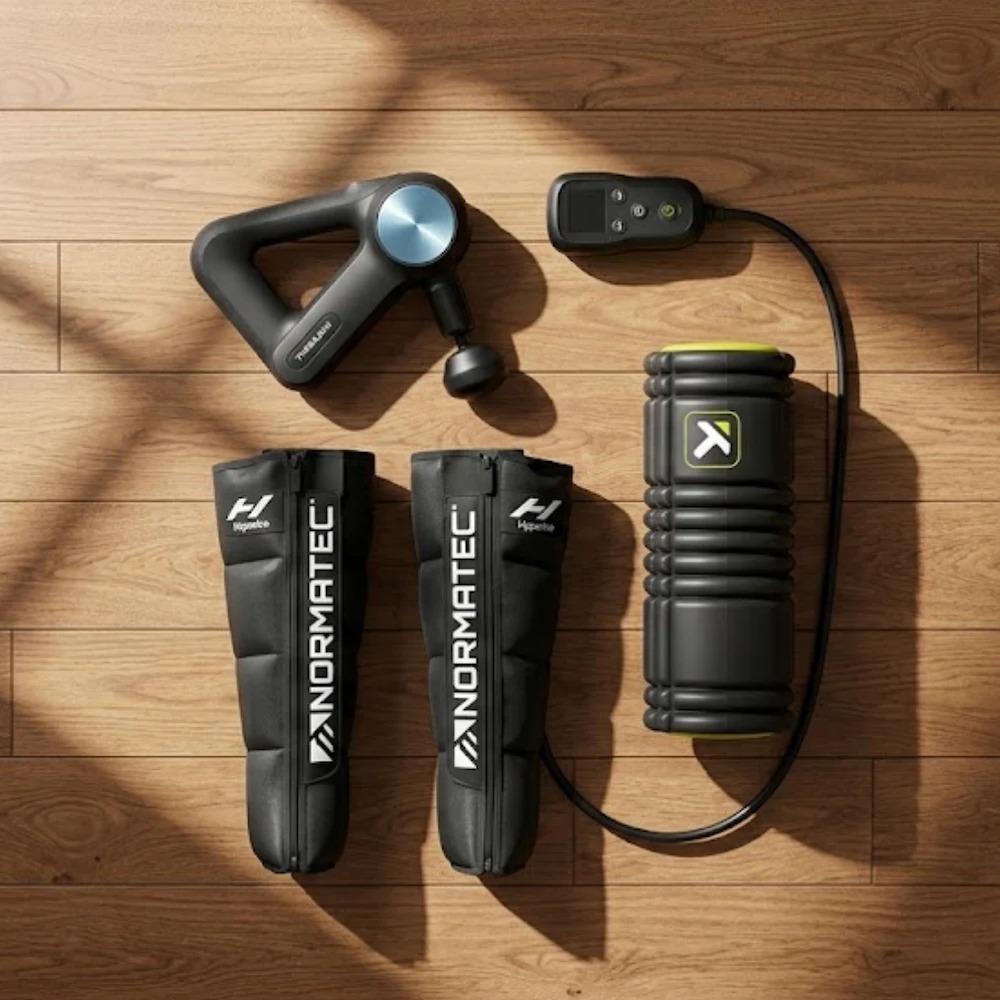
If you push your body hard in the gym, you know that real growth happens during downtime. Severe muscle soreness can leave you so stiff it stalls your training momentum for days. Choosing a recovery tool is confusing because brands all use different methods like automated percussion, air compression, or manual foam rolling.
To see what actually works, our staff tester Austin put three of the most popular tools to a month-long test during heavy training. Then, we evaluated each one on mechanism and full body recovery depth, passive lower body flushing performance, portability, and value to find a definitive winner.
What to Look For in Muscle Recovery Tools
Before investing in recovery hardware, it helps to understand what actually drives tissue repair. Efficient recovery comes down to three main pillars.
- The Relief Mechanism: Look for tools that actively increase deep localized circulation and mechanically disrupt tight restrictions, rather than just masking surface-level pain.
- Friction to Use: An exhausted athlete will not tolerate a complex setup or heavy physical labor. Choose tools that simplify the path to relaxation.
- Target Versatility: A recovery tool needs to adapt seamlessly across your entire anatomy, not restrict your recovery to a single zone.
Mechanism and Full Body Recovery Depth: Theragun Prime Wins
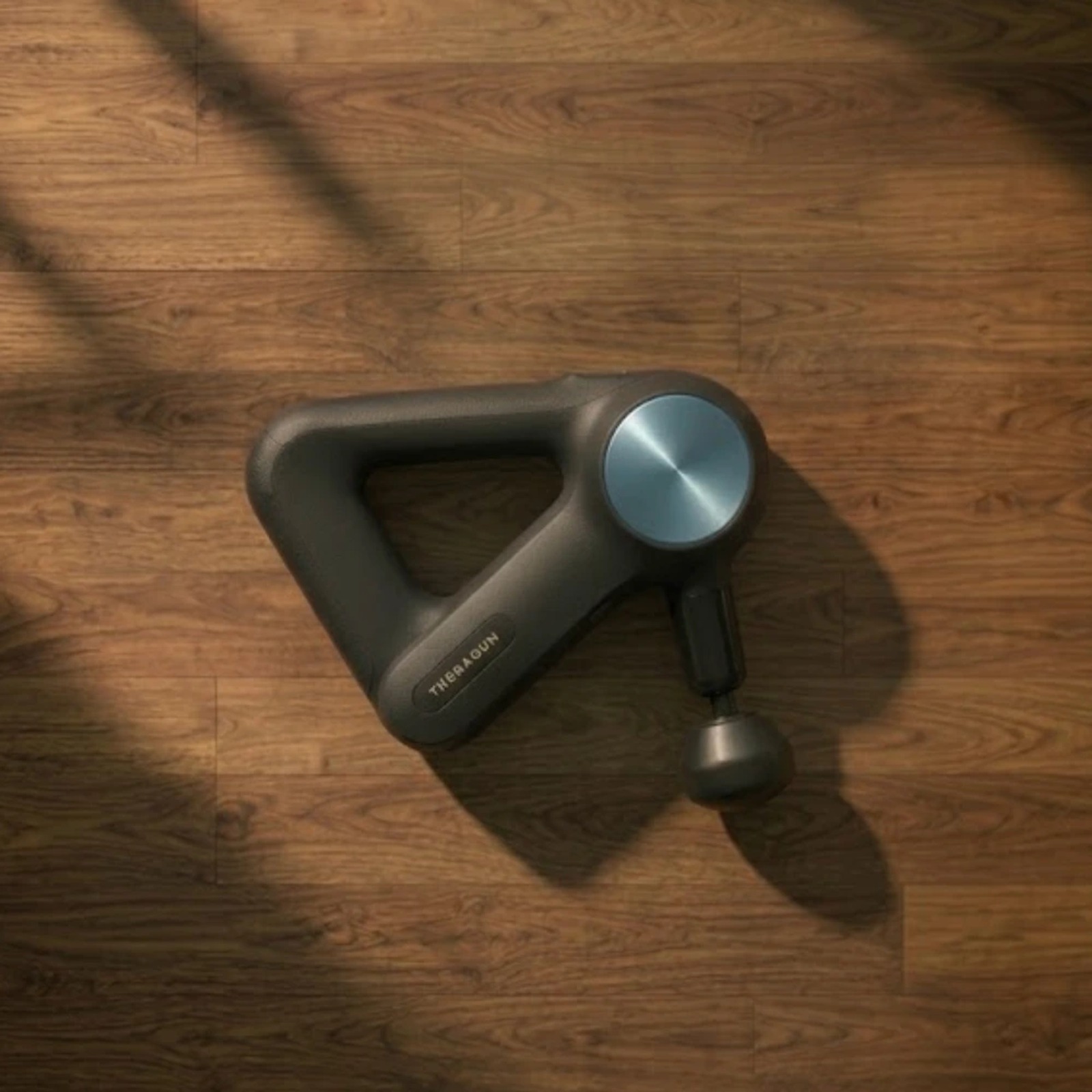
Evaluating how these tools physically interact with tight muscle tissue showed a massive difference between automated relief and manual labor.
Theragun Prime wins with the most efficient full-body tissue release we tested. The Theragun Prime uses percussive therapy at a fixed 16mm amplitude and speeds up to 2,400 percussions per minute. During testing, Austin easily shifted between muscle groups and noted he felt "rapid, targeted tissue release with zero physical strain." The depth and speed mechanically override pain signals while driving deep blood flow directly into the muscle spindle, instantly melting away knots in his calves and shoulders.
Hyperice Normatec 3 uses dynamic air compression with a patented pulsing pattern to mimic the natural muscle pump of the limbs. It is highly effective at shifting stagnant fluid and reducing swelling after long endurance sessions. However, the sleeves only cover your legs, leaving your upper body completely out of the equation.
TriggerPoint GRID came in last due to high physical execution requirements. The GRID relies entirely on manual myofascial release. While excellent for rolling out the thoracic spine, it forces you to support your own body weight in a plank or side-bridge position. Holding an active physical pose to roll your quads when your muscles are already spent is highly inefficient.
Passive Lower Body Flushing Performance: Hyperice Normatec 3 Wins
When evaluating how a tool performs during an actual recovery session, the physical experience matters just as much as the tech specs.
Hyperice Normatec 3 wins with an unmatched, entirely passive lower-body recovery experience. For pure lower-body relaxation, nothing beats the Normatec 3. Once Austin zipped into the leg sleeves, the zone-based air compression systematically flushed out fatigue from his feet up to his hips. It completely eliminates human effort; you simply sit back and let the control unit do the physical work, resulting in a noticeable reduction in perceived next-day leg heaviness.
Theragun Prime provides rapid tension relief, but it requires active participation. Austin had to physically hold the device and manually aim it at his muscles, meaning it doesn't offer the same hands-off, total-immersion relaxation as a compression sleeve setup.
TriggerPoint GRID offers the lowest comfort level during acute soreness. Forcing tight, exhausted muscles down onto a hard, dense foam structure requires significant physical effort. Managing intense fatigue while balancing on the roller felt closer to an extension of a workout than a restorative recovery session.
Travel Friendliness and Portability: TriggerPoint GRID Wins
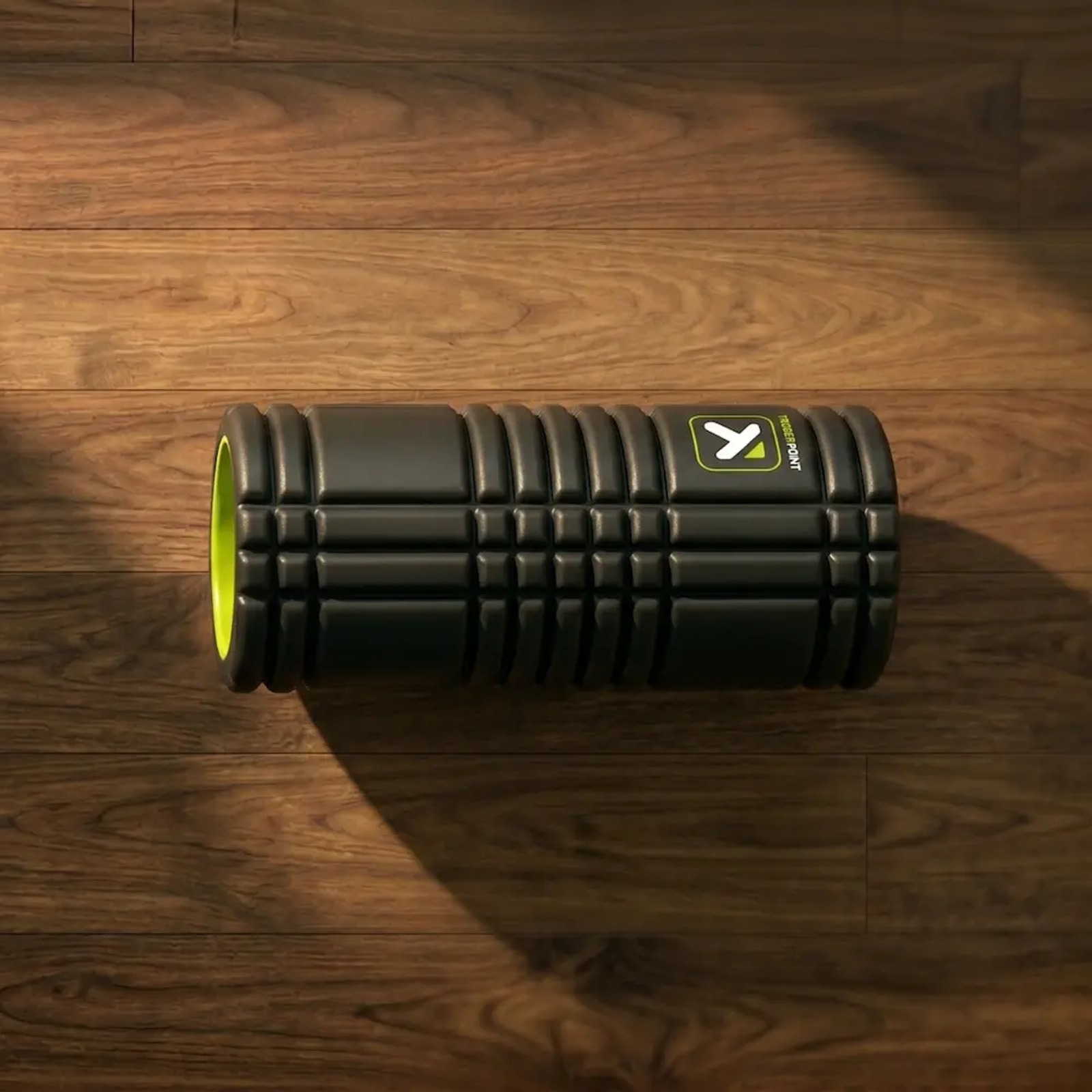
Keeping up with a recovery routine means your gear needs to easily follow you to weekend events, the gym, and hotel rooms.
TriggerPoint GRID wins for pure durability and travel independence. The GRID takes the top spot for portability because it weighs practically nothing and requires zero electricity. Austin routinely tossed it into his gym bag and the back of his truck without a single worry about keeping a battery charged, tracking down power cables, or damaging a digital screen.
Theragun Prime is highly portable and slips neatly into its included travel pouch. With a solid 120-minute battery life and a compact frame, Austin found it easy to bring along to the track for immediate post-workout relief in the locker room.
Hyperice Normatec 3 is a logistical nightmare to travel with regularly. The bulky leg sleeves, external air hoses, and dedicated power console take up a massive chunk of luggage space, making it strictly a home-bound luxury.
Price and Value
Investing in high-end recovery hardware requires balancing the upfront financial hit against the long-term physical payoff.
Theragun Prime costs $299–$349 for automated percussive therapy at a lower long-term cost than frequent professional massages.
Hyperice Normatec 3 costs $799–$999 for a premium, dedicated leg compression system.
TriggerPoint GRID costs $30–$45 for a durable, budget-friendly baseline for manual self-myofascial release.
The Bottom Line
Which option stands out among today's top muscle recovery tools? After a month of intensive testing, we recommend the Theragun Prime. It removes the physical effort from your post-workout routine, delivering targeted relief exactly where you need it most without breaking the bank.
Ready to try Theragun Prime?